
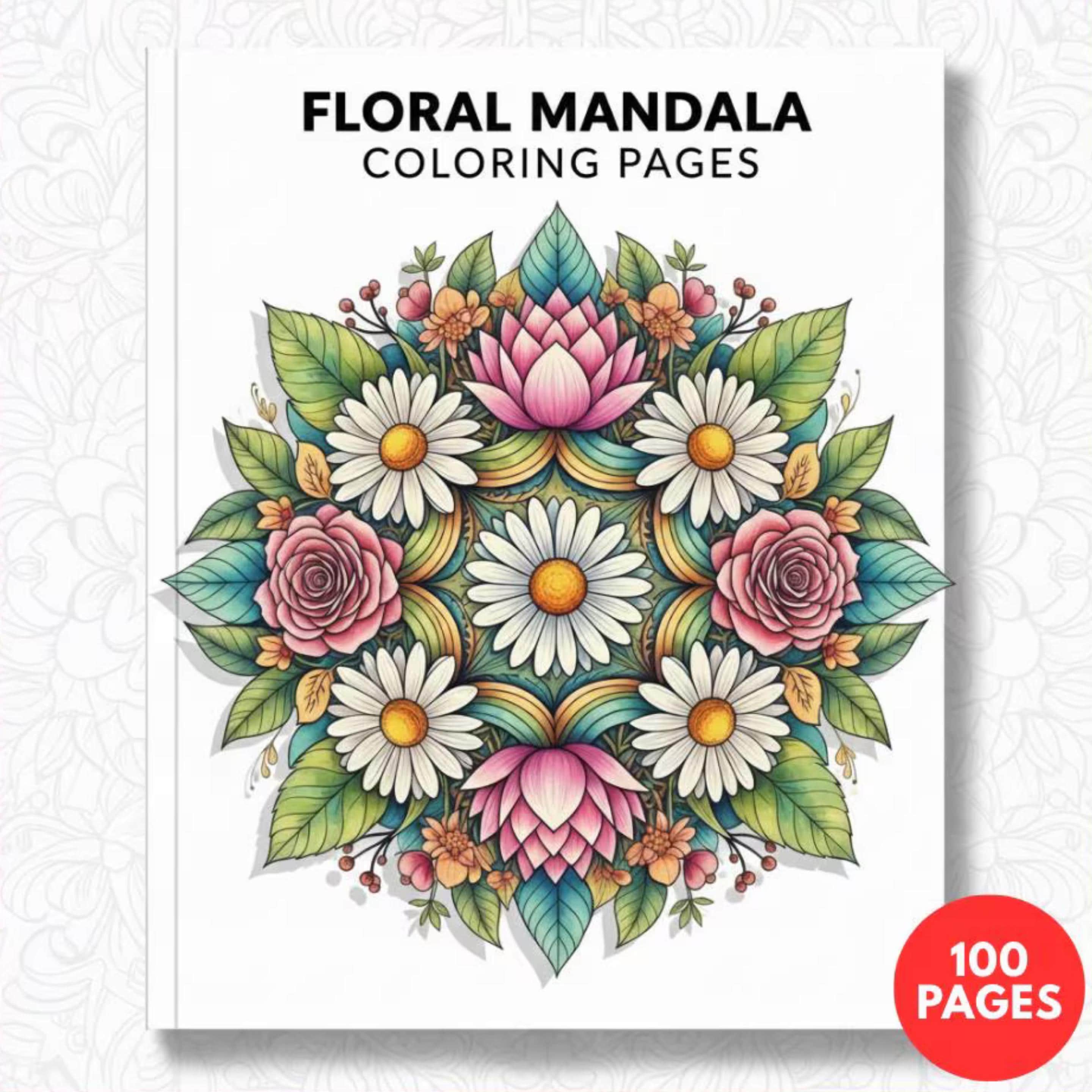
Mandalas have been used as meditation tools for thousands of years across Hindu, Buddhist, and Native American traditions. Today, mandala coloring pages have become one of the most popular adult coloring categories — and for very good reason. Let's explore why, and how to get the most from your mandala coloring practice.
What is a Mandala?
The word "mandala" comes from Sanskrit and means "circle." Mandalas are geometric designs that radiate outward from a central point in concentric circles and intricate patterns. The symmetry and repetition of mandala designs are precisely what makes them so powerful for mindfulness — your eye naturally follows the patterns, guiding your brain into a calm, focused state.
Science-Backed Benefits of Mandala Coloring
Research into mandala coloring has produced compelling results:
- Reduces anxiety: A 2005 study found mandala coloring reduced anxiety significantly more than free-form drawing or coloring a plaid pattern
- Promotes mindfulness: The structured, repetitive nature of mandala patterns naturally induces a flow state similar to meditation
- Improves focus: Coloring intricate designs trains sustained attention — useful for people with ADHD or high-stress jobs
- Lowers cortisol: Just 20 minutes of mandala coloring has been shown to reduce cortisol (the stress hormone) levels
- Supports trauma recovery: Art therapists frequently use mandala creation and coloring as a therapeutic tool for trauma processing
💡 Science tip: Circular, symmetrical designs are particularly effective because they engage both hemispheres of the brain simultaneously — the logical left brain tracks the geometric structure while the creative right brain handles color and expression.
Beginner's Guide to Mandala Coloring
Start from the outside in — or inside out
There's no wrong direction, but many colorists prefer starting from the outermost ring and working inward. This keeps your hand away from already-colored sections and prevents smudging.
Choose a color palette before you start
Laying out 4-6 colors before you begin creates cohesion. Complementary colors (opposite on the color wheel, like blue and orange) create vibrant contrast, while analogous colors (adjacent, like blue, teal, and green) create harmony.
Repeat colors in the pattern
The most visually pleasing mandalas use colors consistently — if you use red in one petal, use it in the corresponding petals around the circle. The symmetry of the design naturally guides this.
Our Best Mandala Coloring Collections
At Noetica Store, we offer several mandala collections designed specifically for therapeutic coloring:
- Floral Mandala Coloring Pages — botanical flowers woven into geometric mandala patterns
- Butterfly Mandala Coloring Book — delicate butterfly wings transformed into symmetrical mandalas
- Flower Mandala Coloring Books — pure botanical mandala art for stress relief
Start Your Mandala Journey Today
Instant download PDF coloring books — print at home and start coloring within minutes.
Browse Mandala Collections →